Service
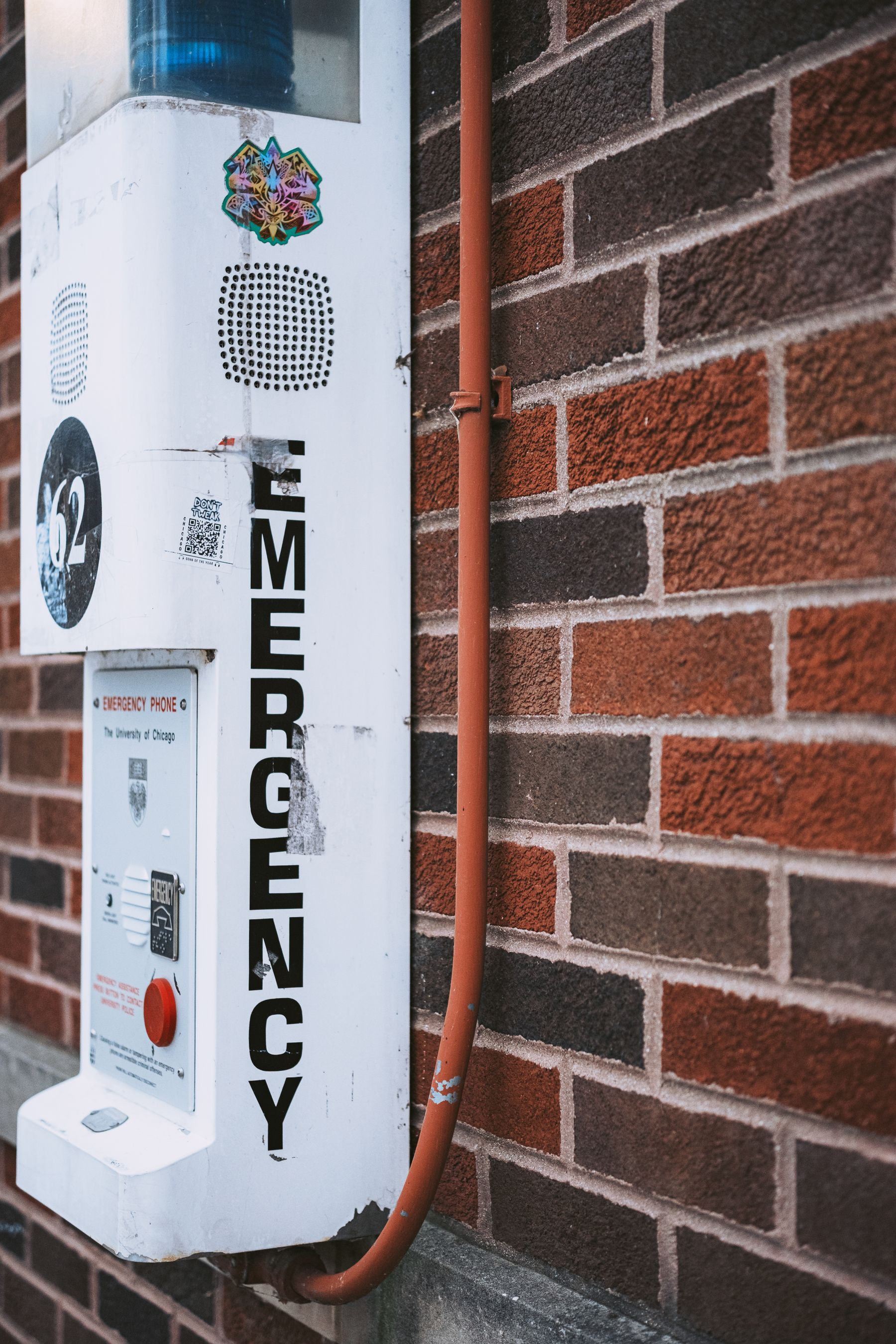
Emergency Call Stations, Blue Light Phones and Parking Call Boxes
For campus facilities and public safety departments, parking operators, medical campuses and general contractors who need a call for help to reach a person who answers. We install the towers, pedestals and wall stations, the call path, the camera and lighting coordination, and the supervision that proves each unit still works.
No obligation, and we will say so if the work is outside our license.
- Code Blue
- Talkaphone
- Viking Electronics
- Gai-Tronics
We are not tied to any brand. If your drawings call for something else, we install to the specification.
Where emergency call stations belong on a site#
Telelink Business Services is a licensed C-7 Low Voltage Systems Contractor, CSLB License #472017, and emergency call stations, blue light phones and parking structure call boxes sit inside that classification, which includes telephone systems. We install them on college and university campuses, parking structures and surface lots, transit areas, medical campuses, agency sites and large industrial properties across California.
The device exists for the person who cannot use a phone: it is in the car, the battery is dead, there is no signal in a concrete deck, or there is no time to dial. Placement follows the places where a person is alone and far from a door:
- Parking decks at each level, near the elevator lobby and the stair landing
- Remote and overflow surface lots, where the walk to a building is long
- Campus paths and quads on the route between an evening class and a lot
- Transit platforms, bus stops and drop off areas at the edge of a site
- Isolated building entrances, loading areas and service yards
- Medical campus paths between parking and a clinic entrance
Coverage is judged by sight line, not by spacing on a plan. From any point on a designated path, a person should be able to see a lit beacon and reach it in a short walk. We walk the site after dark with facilities and campus security before fixing locations, because plans and sight lines rarely match once landscaping and parked cars are in place.
Code Blue, Talkaphone, Viking Electronics and Gai-Tronics are among the manufacturers commonly specified for this scope on California projects, and we install to the specification.
Tower, pedestal or wall station, and how it is built#
Three form factors cover most sites, and the choice is driven by where the device goes.
| Blue light tower | Pedestal station | Wall or column mount | |
|---|---|---|---|
| Typical location | Open lots, quads, paths | Drive lanes, walkways, transit areas | Parking decks, stairwells, building faces |
| Visibility | Beacon visible across a lot | Visible at close range | Visible along the aisle |
| Civil work | Foundation, conduit, trenching | Foundation, conduit | Anchors into concrete, surface or recessed |
| Cost driver | Distance from the building | Distance from the building | Pathway availability |
| Fits | Sites needing a visible landmark | Constrained footprints | Structures with existing pathway |
Construction details that matter more than the brand:
Vandal resistance. Cast or heavy gauge enclosures, tamper resistant fasteners, recessed or armored buttons, and a speaker grille that survives being hit. Exterior devices are specified for abuse, not for appearance.
Weather rating. Exterior units need a gasketed enclosure rated for outdoor use, drainage, and hardware suited to the site. Coastal locations get stainless or coated hardware, and sun exposure makes the finish part of the specification.
Lighting at the device. A station in the dark is hard to find and unpleasant to stand at. Its beacon marks the device; site lighting has to make the area around it usable, which is coordinated with the electrical engineer during design.
Accessibility. Buttons, handsets and signage are mounted within the reach ranges in California Building Code Chapter 11B, with clear floor space and a firm, level, connected surface to stand on. A tower on a lawn with no paved approach does not meet that, and the pad belongs in the civil scope.
We provide the station, the low voltage and network path, the terminations, the programming and the testing. Pedestal foundations, trenching and line voltage power are carried by the appropriately licensed contractor, and we hand over the foundation detail and the conduit stub location while the civil package is still being priced.
How the call is delivered as copper lines retire#
The call path used to be simple: every call box was an analog line. Copper retirement has ended that, and it is the largest change in this scope.
VoIP over the site network puts the station on the data network as an endpoint on the phone system. It is the lowest ongoing cost where a drop or a fiber path already reaches the location, and it inherits the network’s fate: if the switch, the uplink or the phone platform is down, the station is down. Backup power for the switch and the uplink belongs in the design.
Cellular gives a station its own path with no trenching, which makes it the practical answer for a remote lot where conduit would cost more than the device. It carries a monthly cost per unit, depends on carrier coverage measured at that exact spot, and needs a plan for carrier network changes over the life of the device.
IP over a wireless bridge suits a lot that is line of sight from a rooftop and too far to trench. It behaves like the VoIP option once the link is up.
Whichever path is used, the station needs power. Local line voltage with a battery, a PoE drop, or solar on a remote unit are the usual options, and battery runtime is specified against how long the site expects to run without utility power.
Who answers, and what happens if nobody does#
A call station is a communication system, and the communication ends at a person. That person is named during design.
On a campus, calls usually land at a dispatch center staffed around the clock. On smaller sites, calls go to a security desk during hours and roll over to a monitoring center or answering service after hours. Each of those is a different programming and a different test.
What matters more than the primary destination is what happens when the primary does not answer. Every station gets an escalation list: the call rolls to a second destination after a set number of rings, then to a third, and finally to a destination that is always attended. Stations also support an automated announcement so the caller hears that the call is being placed and that help is being reached, which keeps a frightened person on the line.
Two details belong in the handover documentation. Each station identifies itself to the answering point by a name that matches the site signage and the map, so the dispatcher knows where the caller is without asking. And the answering point gets a written procedure for an open call with no speech, which is common, and for repeat false calls from one unit, which usually means a stuck button.
Strobes, cameras and lighting at the station#
Signalling makes the call visible while it is happening. Pressing the button lights a blue beacon or strobe at the station, and many platforms can trigger a second beacon or an audible tone across the area. Responders get something to drive toward, and anyone nearby knows a call is in progress.
Camera integration is the part that changes how the call is handled. When a station is pressed, the camera system can call up the nearest views on the dispatcher’s monitor and start a recording bookmark, so the person answering sees the caller and the surroundings while talking. Getting that right means designing the station and the camera together: a camera aimed to include the station and its approach, a lens that gives usable detail at that distance, adequate light or infrared at the mount, and an event tie tested as one sequence rather than two.
Where the site runs access control, the call, the camera view and the door status can land on one operator screen.
Supervision, self test and maintenance#
An emergency call station spends years doing nothing and then has to work. Supervision is what keeps that promise honest.
Current platforms check themselves on a schedule: the unit places an automated test call, confirms audio in both directions, confirms the beacon, checks battery condition, and reports a failure by email or to a dashboard. A station that stops checking in raises a fault the same way a missing device does on any supervised system. That reporting is worth specifying even when it costs more, because the alternative is discovering a dead station during an incident.
Automated testing does not replace a physical check. On a fixed interval, someone presses the button at each station, confirms the beacon, confirms audio both ways with the answering point, confirms the camera call up, checks the signage and the light level, and logs it with a date and initials. That log is what an owner produces when a call fails and someone asks when the unit was last tested. We set the interval, provide the log format, and carry the work under a service and maintenance agreement.
Areas of refuge and elevator phones: who installs what#
Two adjacent scopes look like this work and are built by different trades. Both belong in the bid conversation early.
Two way emergency communication at a code required area of rescue assistance under California Building Code Section 1009.8 is a different system from a blue light tower. Many California fire departments classify refuge and elevator landing communication as fire alarm appliances, requiring a C-10 electrical contractor’s license and California State Fire Marshal listed equipment. Telelink does not carry that scope. It falls outside the C-7 classification, and we refer it to a licensed C-10 fire alarm contractor who holds the permit and installs the work. If the drawings show refuge communication at stair landings or elevator lobbies, raise it at bid time rather than at plan review.
Elevator emergency phones: Telelink provides the building side telephone, network and monitoring path terminated at a demarcation point outside the hoistway. Work on the elevator itself, including in car devices, hoistway cabling and controller connections, is regulated under California Labor Code Section 7311.2 and is performed by a Certified Competent Conveyance Mechanic employed by a Certified Qualified Conveyance Company. In practice we agree the demarcation point with the elevator contractor early, land our line there, and test the call through to the answering point with them.
On government and public works and campus projects, both boundaries sit in the same specification section as the call stations, which is why we read it closely before bidding.
Next step#
Send the site plan with the locations you want covered, the existing call path if there is one, who answers the calls today, and whether the copper lines at the site are being retired. Use request a bid to upload drawings and we will return a location by location bid with the civil, electrical, camera and licensing handoffs drawn. General contractors can start at for general contractors for our prequalification packet and Division 27 scope letter.
FAQ
Questions about emergency call stations
Our call boxes ran on copper phone lines that are being retired. What replaces them?
One of three paths. VoIP over the site network, where a data drop or fiber already reaches the location and the network has backup power. A cellular unit, where trenching a path to a remote lot would cost more than the station. Or an IP station on a wireless bridge back to a building. Each has a different failure mode, so the choice is made per location rather than for the whole site, and each one is tested end to end to the answering point before the copper is cut.
Link to this answerWho answers the call?
Whoever the owner designates, and that decision belongs in the design, not at commissioning. On a campus it is usually a dispatch center staffed around the clock. On a smaller site it is a security desk during hours with a rollover to a monitoring center or an answering service after hours. Every station is programmed with an escalation list so an unanswered call rolls to a second and third destination rather than ringing out, and we test the whole chain including the after hours path.
Link to this answerIs a blue light tower the same as an area of refuge station?
They are two different systems. A blue light tower is a site communication device on the telephone system. Two way communication at a code required area of rescue assistance under California Building Code Section 1009.8 is classified by many California fire departments as a fire alarm appliance, requiring a C-10 electrical contractor's license and California State Fire Marshal listed equipment. That scope sits outside the C-7 classification, so we refer it to a licensed C-10 fire alarm contractor rather than carry it. Where drawings show both, they get bid as two scopes.
Link to this answerCan you install the emergency phone in our elevator?
We bring the building side telephone, network and monitoring path to a demarcation point outside the hoistway, and the elevator contractor carries it from there. Work on the elevator itself, including in car devices, hoistway cabling and controller connections, is regulated under California Labor Code Section 7311.2 and is performed by a Certified Competent Conveyance Mechanic employed by a Certified Qualified Conveyance Company. We set the demarcation point with that contractor early and test the call through to the answering point together.
Link to this answerHow do we know the stations still work?
Supervision and a test regime. Most current platforms self test on a schedule, place an automated check call, and report a failed unit by email or to a dashboard, which is the difference between finding a dead station in a report and finding it during an incident. On top of that we recommend a documented physical check on a fixed interval: press the button, confirm the beacon, confirm audio in both directions, confirm the camera call up, and log it. A station that has not been tested is a station nobody should count on.
Link to this answerWhat does a call station position cost?
As a California commercial planning range as of 2026, a wall or column mounted station in a parking structure with pathway available commonly runs roughly $2,500 to $8,000 installed, and a freestanding blue light tower in a surface lot commonly runs roughly $8,000 to $25,000 installed once trenching, conduit, the foundation and the power feed are counted. Distance from the nearest building, paving restoration and the call path drive the number far more than the equipment. That is a planning range for budgeting, not a quote.
Link to this answerQuestion not answered here? Ask a person who does this work.
Call (916) 340-7503Email usOr send drawings to bidReviews
What clients have said
Excerpts from reviews clients left on Google over roughly the last ten years. Most of them describe phone, cabling, camera and service work rather than large construction projects, which is a fair picture of who was writing reviews at the time.
These guys handled my phone and phone system move along with wire our new office from top to bottom. When all others failed, such as AT&T, Telelink was there to pick up the pieces. Most important out of all the great things I could say, they took all my calls and emails, no matter what time of day or night, even on the weekend and holidays. They know what they are doing and get it done right the first time.
U.S. Certified SignersOffice move: phone system relocation and a full office cabling installationI had an issue with my cameras and called for help. He was able to get me on the schedule within the week. They came out, diagnosed the problem, and fixed everything within a couple hours. Very professional, affordable, and fast.
Evan KorisService call on an existing camera systemAfter switching telephone and internet from ATT to Comcast, I needed to have some phone and data lines moved. I called Telelink and immediately received a professional response. An appointment was efficiently scheduled to coordinate with Comcast. The technicians were friendly, capable, and extremely helpful in working through some glitches. After the service, I received an invoice which was honest and very reasonable.
Glick OfficeMoves and changes on phone and data lines, coordinated with the carrier
Reviews are reproduced as written, trimmed only where an excerpt is marked with an ellipsis. Have we worked for you? Tell us how it went.
Planning a emergency call stations project? Let’s talk.
Send over a drawing set or just describe what you need. We will tell you what we can take on, what to plan for, and how soon we can be there.