Service
Master Clock, Bell and Tone Systems for California Schools and Agencies
For district facilities staff, hospital plant operations teams and general contractors working in buildings where a schedule governs the day. We install the master clock or time server, the clocks, the bell and tone schedules and the tie to paging, then hand over documentation the facilities team can work from.
No obligation, and we will say so if the work is outside our license.
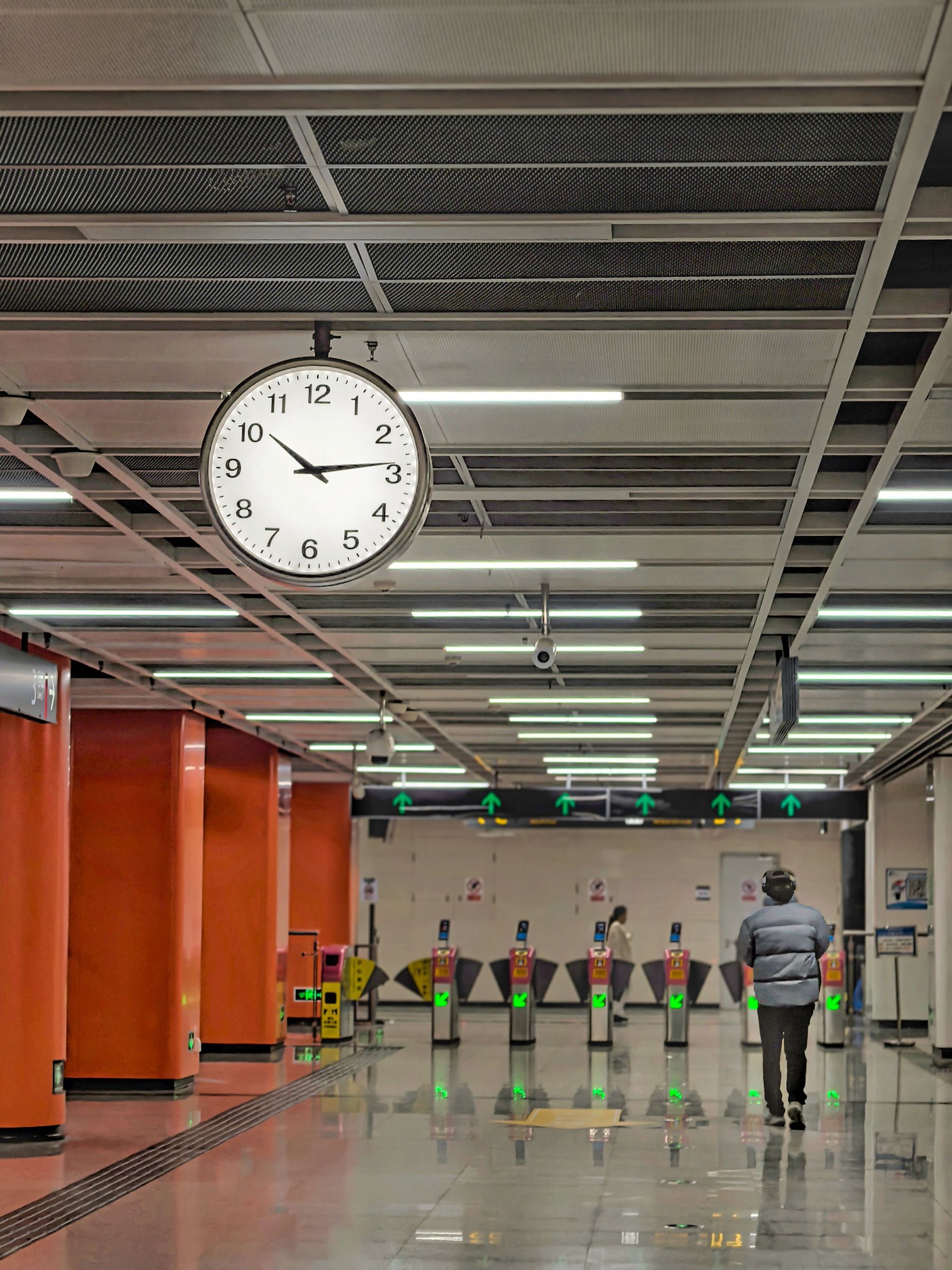
- American Time
- Primex
- Sapling
- Valcom
- Bogen
We are not tied to any brand. If your drawings call for something else, we install to the specification.
Where synchronized time changes how a building runs#
Telelink Business Services is a licensed C-7 Low Voltage Systems Contractor, CSLB License #472017, and synchronized time, bell and tone systems sit inside that classification. We install them for schools and community colleges, hospitals and clinics, senior housing, and public agency buildings across California.
In a building where a schedule governs behavior, the clocks are infrastructure. A class period ends when the bell rings, and if the bell in the gymnasium is 40 seconds behind the bell in the main building, the passing period is wrong for half the campus. A shift change is timed by the clock on the wall and recorded at the time clock. Medication rounds are charted against a wall clock. A court calendar runs on the clock in the corridor. In each case somebody is being held to a time, so the times have to agree.
The second reason is the records. Access control events, camera video, phone system logs and badge readers all stamp time onto data that gets compared later. When an incident review puts a camera clip next to a door event and the two are 90 seconds apart, the review stalls on which one is right. Taking every system’s time from the same source removes that argument before it starts.
Our scope is the master clock or time server, the clocks, the bell and tone hardware, the schedules, the cabling or wireless infrastructure, programming, testing room by room, staff training, and the closeout documentation. American Time, Primex, Sapling, Valcom and Bogen are among the platforms commonly specified on California school, healthcare and agency projects, and we install to the specification.
Wired, wireless and PoE clock distribution#
The distribution method is chosen from the building, not from a preference.
| Wired | Wireless | PoE and IP | |
|---|---|---|---|
| Fits | New construction, accessible ceilings | Occupied retrofits, hard lid ceilings | Buildings with a managed network at the wall |
| Cabling | Correction circuit to every clock | None to the clock | Existing or new Cat6 or Cat6A drop |
| Power | From the circuit | Batteries in each clock | From the switch port |
| Time source | Master clock | Master clock and transmitter | NTP over the network |
| Ongoing work | None once cabled | Battery replacement cycle | Switch port and PoE budget |
| Status reporting | Limited | Varies by platform | Per clock, from the network |
| Watch out for | Pathway cost in existing buildings | Signal into concrete, steel, elevator lobbies | PoE budget, VLAN, switch uptime |
Wired systems remain the straightforward answer in new construction where the pathway is going in anyway. Wireless has made occupied retrofits practical: a clock and its receiver go up in one visit per room with no wall opening, which matters in an occupied hospital corridor or a school that is in session. The tradeoff is a battery schedule and a coverage survey, because concrete stairwells, elevator lobbies and metal shop buildings absorb signal in ways a floor plan does not show. We run that survey with the actual hardware before committing to coverage.
PoE and IP clocks are increasingly what specifiers ask for on projects where a data drop already reaches the wall. Each clock is a network device with an address, takes time over NTP, and reports its own condition, so a facilities team can see a clock that has dropped off without walking the building. They also consume a switch port and PoE budget, and they stop when the switch does, so put them on the same UPS thinking as the rest of the network gear.
The master clock, the time server and NTP#
Every synchronized system has one reference, and the design question is where that reference gets its time.
A traditional master clock holds the time and drives the clocks over its own distribution. A network time server does the same job on the data network, serving NTP to IP clocks and, often, to the rest of the building’s systems. Either way the reference itself is set from one of three sources: an NTP source on the organization’s network, an internet time source, or a GPS antenna mounted with a clear view of the sky where the site wants a reference that does not depend on the wide area network.
Two coordination points come up on every project. The first is which device is authoritative for the whole site. Where the district or agency already runs an NTP source, the clock system follows it rather than becoming a second source of truth. The second is the network path: IP clocks need a VLAN, addressing, and firewall rules that let them reach the time source, and those get written down during design instead of discovered during commissioning.
Redundancy is worth deciding on deliberately. A time server with a second reference and a battery backed real time clock keeps the site correct through a network outage. Without it, clocks hold their last known time and start to drift.
Dedicated circuits for the master clock or time server and for the amplifier racks are electrical scope. We put the load, the location and the circuit count on our submittal early enough for the electrician to carry them in the panel schedule rather than add them by change order.
Bell schedules, tones and special day calendars#
The schedule is where a clock system meets the way the organization runs.
A school year has a regular bell schedule, a minimum day schedule, an assembly schedule, a testing schedule, and a rotating block on some campuses. A community college runs different period lengths by term. A hospital uses tones for shift change and codes rather than a bell. An agency building may want nothing but a chime at opening and closing. The system holds all of those as named schedules with a calendar that says which one runs on which day, plus a holiday calendar that suppresses everything.
Practical points from the field:
- Use distinct tones for distinct events. A passing bell, a warning bell, an emergency drill tone and a shift tone should be recognizable apart, and staff should be able to name them.
- Zone the bells. Athletic fields, shops and portables often want a different level or a different tone than a classroom wing.
- Give one person the calendar. Someone in the front office loads the year, and their access is set up before turnover rather than after the first schedule change.
- Load the whole year at commissioning. A schedule built in front of the person who owns it is the training session.
- Confirm the manual override. Staff need a way to ring, silence or hold a bell without a support call.
Bells and announcements from the same zones#
A bell and an announcement should come out of the same speakers, in the same zones, at levels that were set together. That is a paging design as much as a clock design, and it is covered in more depth on our audio visual and paging page.
Where a school or campus already has an intercom and paging system, the clock and bell system either drives those zones through an interface or shares the amplifiers directly. Where both are in the same package, we lay out speaker zones once and map the bell schedule onto them. On K-12 and higher education projects the classroom call-in function usually lives on the same system, which means the intercom, the bell and the clock in a classroom are one submittal and one test.
Where clock or bell tones share notification appliances with a building fire alarm system, that portion of the work is performed by the licensed C-10 fire alarm contractor of record. If a specification puts bell tones on fire alarm speakers, we flag it at bid time so both packages get priced by the trade that carries them rather than argued about at rough in.
Batteries, drift and what fails over time#
Clock systems fail quietly. Nothing alarms, and one clock in a back corridor is simply wrong for a year.
Quartz movements drift, which is the reason for synchronization in the first place. A wireless clock that misses its correction signal keeps running on its own movement and separates from the rest of the building at its own rate. Batteries in wireless clocks reach end of life on a cycle that the maintenance program has to carry, and they do not all fail in the same month. A PoE clock on a switch that was rebooted comes back and re-syncs, unless the VLAN changed underneath it.
Two things reduce the maintenance load. Specify clocks that report status to the master so the facilities team reads a list instead of walking corridors. And write the battery cycle into a service and maintenance agreement with the schedule review, so the year gets loaded and the drifted clocks get found before the term starts.
DSA, HCAI review and the documentation you receive#
K-12 and community college projects are subject to Division of the State Architect review. Hospital and skilled nursing projects are subject to HCAI review. Telelink coordinates deferred submittals accordingly. Product data, mounting and anchorage details and cut sheets go in on the schedule the design team sets, in the form the reviewer expects. On healthcare work the anchorage detail is usually the item that gets a comment, so we submit it early.
Closeout includes a clock schedule by room with the type and address of each device, a wireless coverage map with transmitter and repeater locations where wireless is used, the master clock or time server configuration and time source, every named bell schedule and the calendar that drives it, the user accounts and rights for whoever manages schedules, a battery replacement schedule, a room by room test log, and the manufacturer’s operation and maintenance manuals. The test log records that each clock followed a correction and that each zone sounded on a scheduled bell, with the technician’s initials next to it.
Next step#
Send the floor plans, the room list, the bell schedules you run, whether the building stays occupied during the work, and any existing paging or intercom system we should tie into. Use request a bid to upload drawings and we will return a clock and zone count with the electrical, network and review handoffs drawn. General contractors can start at for general contractors for our prequalification packet and Division 27 scope letter.
FAQ
Questions about clock & bell systems
Wired, wireless or PoE clocks: which suits our building?
New construction with cable pathway already in the walls usually goes wired or PoE. An occupied retrofit in a building with hard lid ceilings usually goes wireless, because a battery clock and a receiver go up in one visit per room with no wall opening. PoE and IP clocks suit buildings where a data drop already reaches the wall and the network is managed, since they take time from the same source as everything else and report their own status. Many campuses end up mixed, and that is a reasonable outcome as long as every clock takes time from one source.
Link to this answerWhat keeps all the clocks on the same time?
One time source, distributed. A master clock or network time server holds the reference and every clock follows it, either over the network using NTP, over a wireless link, or over a wired correction circuit. The reference itself comes from an NTP source on the network, from the internet, or from a GPS antenna where the site wants a source that does not depend on the wide area network. Clocks that free run on their own quartz movement drift apart, which is the problem the system exists to solve.
Link to this answerCan the bell system also carry announcements?
Yes, when the bell tones and the paging come from the same amplifiers and zones. That is the usual arrangement on schools, where the bell schedule, classroom call-in and all call announcements run through one system. Where a clock system is installed on its own and paging is added later, the two often end up with different zone maps, and correcting that afterward is more work than designing it once.
Link to this answerWho reviews this scope on a school or hospital project?
K-12 and community college projects are subject to Division of the State Architect review. Hospital and skilled nursing projects are subject to HCAI review. Telelink coordinates deferred submittals accordingly, which means the product data, mounting details and any anchorage information go in on the schedule the design team sets, not at rough in. Building the submittal around what the reviewer asks for is the part that protects the schedule.
Link to this answerWhat maintenance does a clock system need?
Batteries in wireless clocks on a replacement cycle, an annual check that every clock is following the master and none has dropped off the wireless link or the network, a review of the schedule before each new school year or fiscal year, and a check that the holiday calendar is loaded. Systems that report clock status back to the master make this a report rather than a walk of every room, which is one reason to specify that capability.
Link to this answerQuestion not answered here? Ask a person who does this work.
Call (916) 340-7503Email usOr send drawings to bidReviews
What clients have said
Excerpts from reviews clients left on Google over roughly the last ten years. Most of them describe phone, cabling, camera and service work rather than large construction projects, which is a fair picture of who was writing reviews at the time.
These guys handled my phone and phone system move along with wire our new office from top to bottom. When all others failed, such as AT&T, Telelink was there to pick up the pieces. Most important out of all the great things I could say, they took all my calls and emails, no matter what time of day or night, even on the weekend and holidays. They know what they are doing and get it done right the first time.
U.S. Certified SignersOffice move: phone system relocation and a full office cabling installationI had an issue with my cameras and called for help. He was able to get me on the schedule within the week. They came out, diagnosed the problem, and fixed everything within a couple hours. Very professional, affordable, and fast.
Evan KorisService call on an existing camera systemAfter switching telephone and internet from ATT to Comcast, I needed to have some phone and data lines moved. I called Telelink and immediately received a professional response. An appointment was efficiently scheduled to coordinate with Comcast. The technicians were friendly, capable, and extremely helpful in working through some glitches. After the service, I received an invoice which was honest and very reasonable.
Glick OfficeMoves and changes on phone and data lines, coordinated with the carrier
Reviews are reproduced as written, trimmed only where an excerpt is marked with an ellipsis. Have we worked for you? Tell us how it went.
Planning a clock & bell systems project? Let’s talk.
Send over a drawing set or just describe what you need. We will tell you what we can take on, what to plan for, and how soon we can be there.