Market
Low Voltage Contractor for Senior Living and Assisted Living
For owners, operators and general contractors renovating senior housing, assisted living and memory care communities in California while residents are in place. You get a nurse call or emergency call system, resident Wi-Fi, controlled entry and common-area cameras installed one wing at a time around care schedules, with dust control, quiet hours and clean units as part of the scope.
No obligation, and we will say so if the work is outside our license.
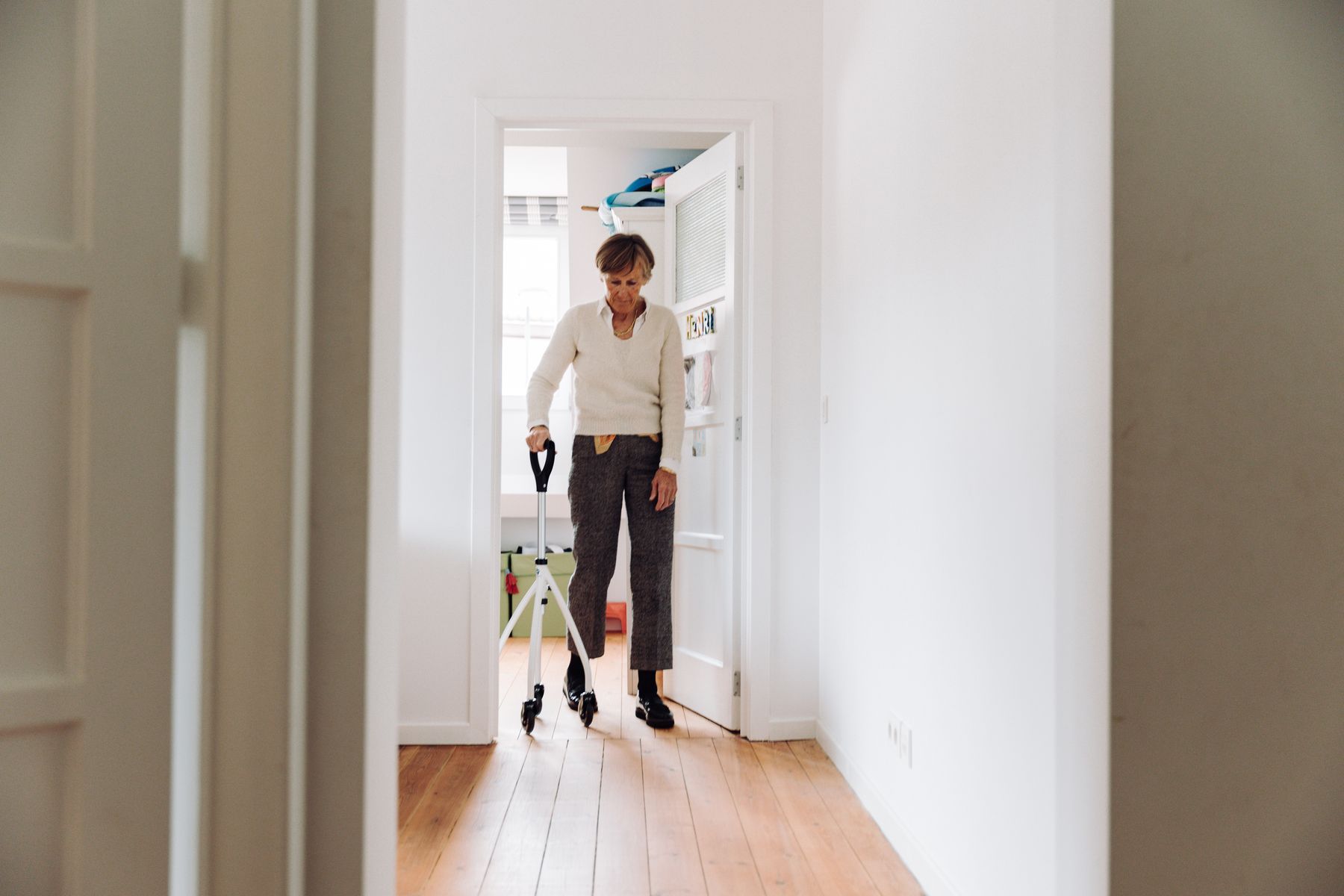
- Owners and operators of senior housing
- Assisted living and memory care operators
- GCs on occupied senior housing rehabs
- Nonprofit sponsors of HUD-assisted senior communities
- Nurse call and emergency call
- Resident and staff Wi-Fi
- Controlled entry and access control
- Common-area video surveillance
- CATV distribution
- Emergency call requirements of the licensing or funding program
- UL 1069 listed systems where the facility is licensed healthcare
- Operator rules for dust containment and resident areas
- NDAA Section 889 / 2 CFR 200.216 on HUD-assisted work
- Resident notice and unit-entry protocols
| Typical scope | Nurse call, Wi-Fi, entry, cameras, CATV |
|---|---|
| Nurse call | Pull cords, pendants, dome lights, staff annunciation |
| Phasing | One wing or floor at a time, around care schedules |
| Containment | Dust control, quiet hours, units left clean |
| Project | Horton House, San Diego |
| License | CSLB #472017, C-7 Low Voltage Systems |
What senior housing adds to a multifamily low voltage scope#
A senior living community looks like a multifamily building on the drawings. In the field it operates on a care schedule with clinical staff on site around the clock. Residents may use walkers, oxygen, hearing aids and daily medication. Some have memory impairment and will walk through an open door. Meals, medication passes, showers and shift changes happen at fixed times. The building never closes and the residents cannot go somewhere else for the day.
That changes every part of a low voltage installation:
- Pathways are the same corridors residents walk with walkers, so cable carts and ladders need a clear-lane plan.
- Ceiling openings put dust into the air of people with compromised lungs, so containment is not optional.
- A door held open for a cable pull is a wander risk.
- A pull cord out of service for an hour leaves that unit with no way to reach staff.
The nurse call or emergency call system is a requirement of the license, the funding program or the owner’s operating standard depending on how the community is licensed and funded, not an amenity.
Telelink Business Services is a licensed C-7 Low Voltage Systems Contractor, CSLB License #472017. We renovated the low voltage systems in an occupied senior housing building in San Diego, and the practices below come from that work.
Who buys low voltage in senior and assisted living#
The buyer depends on how the community is licensed and funded, and that also decides which rules apply to the call system and the cameras.
| Community type | Who buys | What the call system has to be | What else follows the funding or license |
|---|---|---|---|
| Independent senior housing, HUD-assisted, LIHTC senior or nonprofit sponsored | Owner or asset manager, with the property manager running the building | An emergency call system, usually required by the funding program or the owner’s operating standard | Federal funds bring NDAA Section 889 and 2 CFR 200.216 camera rules |
| Assisted living and memory care, licensed through the state’s community care licensing program | The operator or the administrator | Emergency call, controlled entry and wander management as operational requirements | The administrator sets working hours and escort rules |
| Skilled nursing, licensed healthcare | The operator’s facilities director, often with a healthcare architect | Generally a UL 1069 listed nurse call system | Construction may fall under state healthcare facility plan review rather than the local building department |
| Any of the above delivered by a general contractor | The GC carrying Division 27 and 28 | Set by the community type above | The GC needs a subcontractor that works inside the administrator’s hours and escort rules |
Skilled nursing is covered further on the healthcare page.
Nurse call and emergency call: what the system has to do#
The call path is short: a resident pulls a cord or presses a pendant, staff are alerted with the room number, and the response is logged. The failures are in the details below.
A typical nurse call or emergency call system in senior housing includes pull cord stations in the bathroom and at the bed, pendant transmitters residents wear, a corridor dome light over each unit door, and annunciation at a staff station, on wireless phones or on mobile devices. Systems can be wired, wireless or a mix. Wired stations are supervised, so a cut or unplugged cord reports as a trouble rather than silently failing. Wireless pendants need a receiver plan that covers every unit, the dining room, the courtyard and the laundry, not just the corridors. The head end needs battery backup and a reporting log the administrator can print when a relative or a surveyor asks how long a call took to answer.
We install and configure the system to the manufacturer’s listing and the specification, integrate it with the building phone system where the design calls for it, and test every station from the pull cord to the annunciator before the unit is signed off. Cornell and Rauland are commonly named in senior housing specifications, and where the specification names one we install and commission to that system. Our nurse call guide for California senior housing covers system selection in more depth.
Wi-Fi, entry, cameras and CATV for residents and staff#
Resident and staff Wi-Fi. Residents want video calls with relatives and streaming in their units. Staff want the care software, the nurse call mobile app and the phones to work everywhere, including the elevator lobbies and the courtyard. Those are two networks with different rules on the same access points. We design from a survey of the building’s walls and unit layouts, install managed wireless on Cisco Meraki or the specified platform, and separate resident traffic from staff and clinical traffic.
Controlled entry. The front door needs to let visitors in during the day, screen them at night, and keep residents with memory impairment from leaving unnoticed. That is a video intercom or telephone entry panel (ButterflyMX or DoorKing, both of which we install and configure), readers on staff doors, and door position monitoring on the doors the administrator worries about. Delayed egress and electrified hardware on secured memory care doors involve life-safety egress rules, so the hardware itself comes from the GC’s Division 08 scope or a licensed C-28 contractor. Release on fire alarm is the project’s fire alarm contractor’s connection: we provide the relay point on our controller, show it on the drawings, and test the interface with them.
Cameras in common areas. Lobbies, corridors, elevators, dining rooms, parking and exterior doors. Not inside resident units or bathrooms. Where HUD funds are in the project, cameras and recorders must be NDAA compliant and documented by actual manufacturer. We submit that list with every camera bid.
CATV. Older senior towers often have coax plant that predates digital cable. A rehab is the time to replace it with a documented distribution system so every unit gets signal at the level the video provider requires.
Working around care schedules and vulnerable residents#
The administrator owns the calendar, and we build the phasing around it. Before mobilizing, we meet with the administrator and the director of nursing (or the resident services manager in independent housing) and agree on:
- Work hours by area, with no noisy work during meals, medication passes or scheduled activities.
- One wing or floor at a time, with the crew’s location posted at the nurse station each morning.
- How the crew enters resident units: a staff member or a runner knocks, confirms the resident is comfortable with the visit, and stays within reach. No crew member enters an occupied unit alone.
- Which doors may never be propped, and who holds the credential that opens secured doors for the crew.
- The screening and badging the operator requires before our technicians enter resident areas.
Infection control. Older residents are more vulnerable to airborne dust and to illness, so operators set rules for containment, cleanup and access, and those rules can change on short notice during an outbreak. We work to the operator’s requirements and build the constraint into the schedule rather than discovering it on site.
Noise and dust. Core drilling and hammer drilling are scheduled into agreed windows and announced to staff the day before. Cordless tools are used wherever they will do the job. Every unit is vacuumed and wiped before the crew leaves it, and a punch walk with the property manager confirms it.
The occupied building guide shows the notification and scheduling paperwork we use on these projects.
Proof: Horton House, San Diego#
At Horton House, an occupied senior housing renovation in San Diego, Telelink installed property-wide Wi-Fi, CATV distribution, surveillance cameras, access control and a nurse call system while residents lived in the building. The nurse call conversion was run unit by unit with the existing system live until each station was tested on the new one, and the Wi-Fi, camera and entry work was phased by floor around the building’s daily routine. The case study describes the scope as it was performed.
Next step#
Send the drawings, the licensing status of the community, the funding sources and the administrator’s working-hour rules to request a bid, and we will return a bid phased by wing with the electrical, door hardware and fire alarm handoffs marked. General contractors can see how we fit inside your schedule on the general contractor page.
FAQ
Questions about senior & assisted living projects
Is a nurse call system required in independent senior housing?
In independent senior apartments the requirement usually comes from the funding program or the owner's operating standards rather than a healthcare license. Most HUD-assisted and nonprofit senior communities specify an emergency call system with a pull cord in the bathroom and bedroom that reports to a staff station or a monitoring desk. Licensed assisted living and skilled nursing carry their own requirements, and skilled nursing generally calls for a UL 1069 listed system.
Link to this answerCan the old emergency call system stay live while the new one goes in?
Yes, and it should. We install the new head end and corridor wiring first, then convert units one at a time so each unit is on the old system until the moment it is tested on the new one. There is no point in the schedule when a resident has no working call station.
Link to this answerHow do you keep dust and noise away from residents?
Containment and cleanup are done to the operator's requirements, which we ask for before pricing because they affect the labor. Drilling and core work are scheduled into the hours the administrator sets rather than the hours that suit the crew, and each unit is cleaned and checked before we move on.
Link to this answerDo your technicians go through background checks before working in memory care?
Many operators require it, and we comply with the operator's screening and badging process before anyone enters a resident area. We also follow the operator's rule on escorts, which in memory care usually means a staff member controls the doors and knows where our crew is at all times.
Link to this answerWhat happens to Wi-Fi coverage inside resident units with heavy walls?
We survey the actual building before designing, because older senior towers are often concrete or masonry and a corridor access point will not reach the far end of a unit. Where the survey shows it, the design puts an access point in or at the unit rather than relying on hallway coverage. Coverage is validated with a walk test before the floor is signed off.
Link to this answerQuestion not answered here? Ask a person who does this work.
Call (916) 340-7503Email usOr send drawings to bidPlanning a senior & assisted living project? Let’s talk.
Send over a drawing set or just describe what you need. We will tell you what we can take on, what to plan for, and how soon we can be there.