The short answer
As a California commercial planning range as of 2026, the access control side of a standard door runs roughly $2,000 to $6,000 installed, covering the reader, controller share, door position switch, request-to-exit device, power supply, cabling, programming and commissioning. Electrified lock hardware, credentials, elevator control and vehicle gates are priced separately. Cloud platform licensing commonly runs about $150 to $600 per door per year, which is roughly $12 to $50 per door per month.
| Per-door planning range | About $2,000 to $6,000 installed, California 2026 |
|---|---|
| Cloud licensing | About $150 to $600 per door per year, by platform |
| What a door includes | Reader, controller share, DPS, REX, power, cabling |
| Lock hardware | By C-28 locksmith or GC Division 08 scope |
| Standards | UL 294; fail-safe egress per building and fire code |
| License | CSLB #472017, C-7 Low Voltage Systems |
Per-door planning ranges for California commercial work in 2026#
Access control is priced by the door, then adjusted by the site. The figures below are California commercial planning ranges as of 2026, based on our bid history for California commercial work. They are for budgeting, not for quoting.
| Scenario | Planning range per door, installed |
|---|---|
| Interior door, cloud controller, card or mobile reader, existing electrified hardware, short cable run | About $2,000 to $3,000 |
| Interior or exterior door, new reader, DPS, REX, power supply, new cabling to controller | About $2,500 to $4,000 |
| Exterior entry with weather-rated reader, longer pathway, conduit, and coordination with new electrified hardware | About $4,000 to $6,000 |
| Single door or two-door job (mobilization and controller not spread across doors) | Add $1,000 to $2,000 to the ranges above |
Taken together, these scenarios give a California commercial planning band of roughly $2,000 to $6,000 per door as of 2026 for the access control side of a standard door. California work sits toward the upper end of that band because of labor rates and because most projects involve existing buildings with finished ceilings and limited pathway. A one or two door job can land above the band once mobilization is added.
What the ranges do not include: electrified lock hardware, cloud subscription or on-premise licensing beyond the first year, credentials, elevator control, vehicle gates, intercom integration, network switches and any electrical work. Those are covered below.
What a controlled door actually includes#
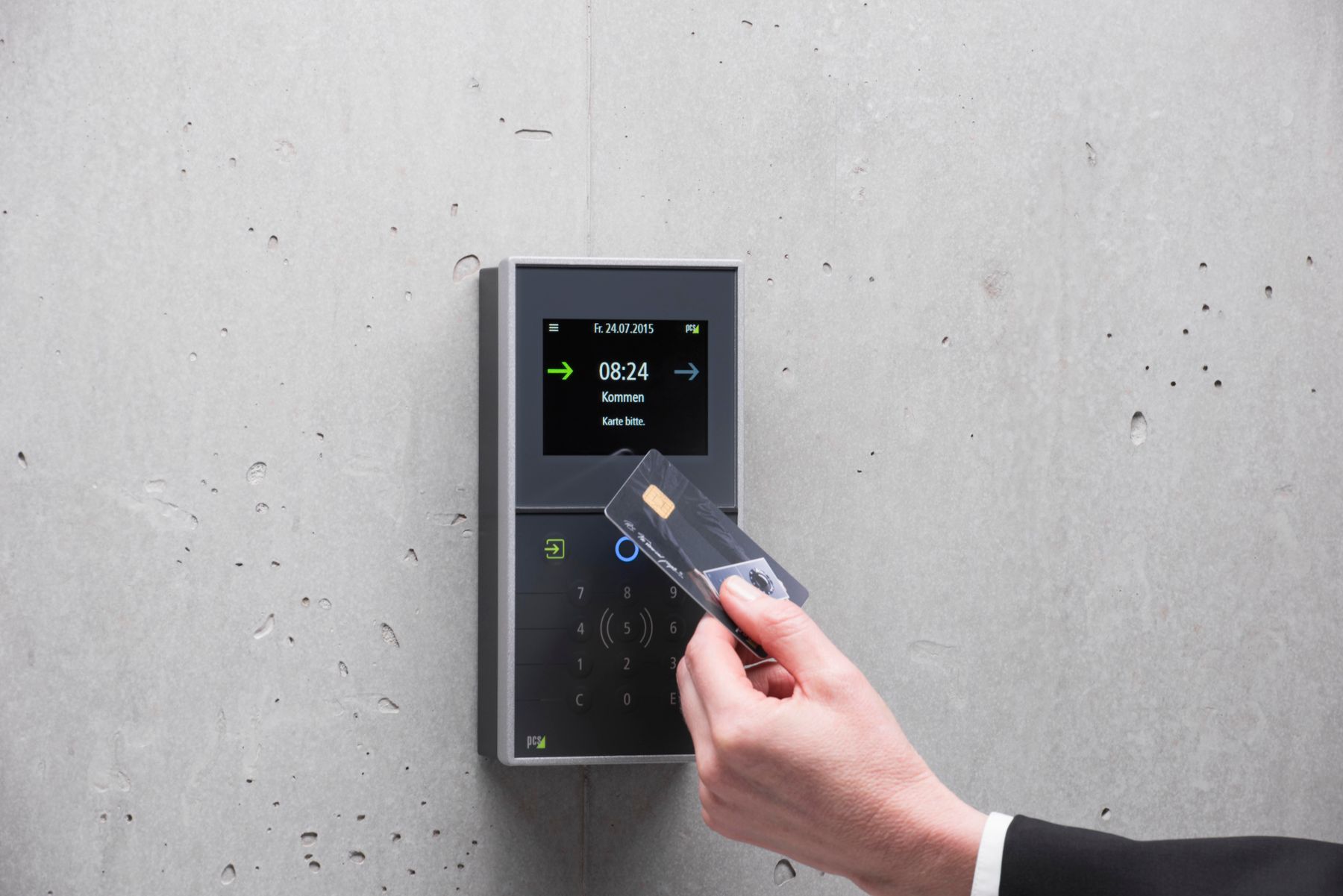
A “door” in an access control bid is a bundle of parts and labor, and the bundle varies between bidders. Ours includes:
| Component | What it does | Notes |
|---|---|---|
| Reader | Reads the card, fob or phone at the door | Prox 125 kHz is easily cloned; 13.56 MHz smart cards and mobile credentials are the current standard |
| Controller share | The panel or cloud controller that makes the unlock decision | Priced per door as a share of a multi-door controller |
| Door position switch (DPS) | Tells the system whether the door is open or closed | Required for door-held and door-forced alerts |
| Request-to-exit (REX) | Motion sensor or push button that shunts the alarm and releases the lock on egress | Required on most controlled doors for free egress |
| Power supply | Regulated, supervised power for locks and controllers, with battery backup | Fail-safe versus fail-secure locking is set here and at the hardware |
| Cabling | Reader, DPS, REX and lock cable from the door to the controller, plus network to the controller | Same pathway rules as any low voltage cable |
| Programming and commissioning | Door schedules, user groups, credentials, alerts, testing | Included per door |
Electrified door hardware (strikes, maglocks, electrified mortise and panic devices, closers and automatic operators) is not in the door price. It is coordinated with the GC’s Division 08 hardware scope or installed by a licensed C-28 Lock and Security Equipment contractor. Line voltage to the power supplies is electrical scope. We show both handoffs on the submittal drawing so nothing falls between trades.
Life safety governs the locking arrangement. Doors in the path of egress have to release under the conditions the building and fire codes require, and fail-safe versus fail-secure is decided door by door with the architect and the fire marshal. UL 294 is the listing standard for access control system units, and most commercial specs call for it. Our access control service page covers the design rules in more detail.
Cloud subscription versus on-premise licensing#
The controller architecture sets the recurring cost.
Cloud-managed platforms (Brivo, Verkada, Avigilon Alta, ButterflyMX, Ubiquiti UniFi Access are commonly specified; we install to spec and configure the platforms we support) put the software in the manufacturer’s cloud and charge a subscription per door, per site or per user. As a California commercial planning range as of 2026, standard tiers commonly run about $150 to $600 per door per year, which is roughly $12 to $50 per door per month. Higher tiers are priced by feature set, and a few platforms bundle basic management with no per door fee. Over ten years on a 20-door system, the subscription is a meaningful share of total cost of ownership, but it includes hosting, updates, mobile apps and remote management, and it removes the server from the owner’s IT scope.
On-premise systems run on a server the owner provides or we supply, with a perpetual software license priced by door count and an annual software maintenance agreement for updates and support. First cost is higher because of the server, licenses and installation, and recurring cost is lower, but the owner carries the server hardware, operating system patching, backups and eventual replacement. On-premise still makes sense for owners with an IT department, sites with unreliable internet, and agencies whose policies restrict cloud hosting.
Our cloud vs on-premise guide walks through the decision in detail. For budgeting: plan for a subscription line on cloud systems from year one, and for a license plus maintenance line on on-premise systems from year two.
Credentials#
Credentials are a recurring cost on multifamily and campus properties.
- Physical cards and fobs: a few dollars to about $10 each for 13.56 MHz smart credentials, more for printed photo ID cards. Budget replacement stock against the property’s own turnover and loss history.
- Mobile credentials (BLE or NFC on a phone): priced per user, often as a subscription bundled with the cloud platform, sometimes as a one-time license per credential.
- Prox 125 kHz cards: cheapest and still common on existing systems, but easily cloned. We recommend migrating readers to multi-technology models when a system is expanded so the credential can change later.
- PIN keypads: no credential cost, appropriate for low-security interior doors or as a second factor.
On a property with high turnover, card and fob replacement across move-ins and lost credentials is a recurring line item. Mobile credentials remove the physical stock and the reissue labor.
Elevator control, gates and intercom integration#
Elevator control. Restricting floors by credential requires a reader in the cab and a relay interface to the elevator controller, which the elevator contractor provides and wires. Cost is driven by the number of cabs and floors and by the elevator contractor’s interface charge. Plan it as a separate line item, about $3,000 to $7,000 per cab for the reader, interface and integration on our side, plus the elevator contractor’s work, and start the coordination early because elevator work has its own permit and lead time.
Vehicle gates. Gate access uses a telephone entry or intercom panel at the approach, a reader or transmitter receiver, vehicle detection loops, and a gate operator. We install and configure DoorKing (DKS) telephone entry systems, gate access controllers and vehicular access equipment. The operator, loops, gate hardware and any concrete or trenching are often separate scopes. Plan the panel, controller and integration as a line item of about $5,000 to $12,000 depending on the panel type and the site, with the operator and civil work priced separately.
Intercom integration. Multifamily and mixed-use entries increasingly use a video intercom that also acts as the access control front end. We install and configure ButterflyMX video intercoms, including lobby panels, keypads, elevator and package room integration and cloud management. Intercom hardware is priced per entry, and the platform carries a subscription typically priced per unit per month. Where the intercom releases the same door the access control system controls, the integration is coordinated at the controller so both systems see the door state. Our intercom and entry systems page covers the options.
What drives the cost up#
- Existing doors without conduit or accessible ceiling, where every cable has to be fished or surface raceway added
- Exterior doors, which need weather-rated readers, longer runs and often conduit
- Aluminum storefront doors, which need specialized electrified hardware and careful coordination with the glazing contractor
- Fire-rated doors, which limit the hardware options and require listed assemblies
- Doors with automatic operators, which add a sequence of operation and a relay interface
- Occupied buildings and after-hours work, which slow the crew and add premiums
- Prevailing wage on public work, which raises the labor portion of every door
- High door counts spread across many small buildings, which multiply controllers and travel
- Integration with cameras, intercoms, elevators and visitor management, each of which adds programming time
- Migration from a legacy system while keeping the building secure during the cutover
Doors already fitted with working electrified hardware, existing conduit to the door frame, and a cloud controller that can be added a door at a time all pull the price down.
Worked examples#
The examples below use the planning ranges above. Assumptions are stated and every figure is a range.
Ten-door office tenant improvement. Single floor, drop ceiling, unoccupied during construction, cloud platform, mobile and card readers, electrified strikes by the hardware supplier, one main entry plus nine interior doors.
| Line item | Planning range |
|---|---|
| Ten doors at $2,000 to $3,000, installed and commissioned | $20,000 to $30,000 |
| Cloud subscription, year one, ten doors | $1,500 to $6,000 |
| Credentials, 60 users, mixed mobile and card, the upper end reflecting mobile credential licensing | $300 to $900 |
| Planning total, year one, low voltage scope | About $22,000 to $37,000 |
Twelve-opening multifamily rehab, occupied, 120 units. Two lobby entries with ButterflyMX video intercom, four secondary exterior doors and four amenity and utility doors make up the ten controlled doors. Two elevator cabs with floor control are the eleventh and twelfth openings and are priced on their own line. Cloud platform, resident mobile credentials. Cabling phased around residents as described in our occupied buildings guide.
| Line item | Planning range |
|---|---|
| Ten doors at $2,500 to $4,500, occupied building, exterior mix | $25,000 to $45,000 |
| Two video intercom entries, hardware and installation | $8,000 to $18,000 |
| Two elevator cabs, readers and interface (elevator contractor’s work separate) | $6,000 to $14,000 |
| Cloud access and intercom subscriptions, year one | $4,500 to $13,000 |
| Planning total, year one, low voltage scope | About $43,500 to $90,000 |
Gated industrial site. One vehicle entry with DoorKing telephone entry and transmitter access, one pedestrian gate with reader, four building doors, on-premise controller in the office IT room, gate operator and loops by the fence contractor.
| Line item | Planning range |
|---|---|
| Vehicle entry panel, controller, receiver and integration | $5,000 to $12,000 |
| Pedestrian gate reader, DPS and cabling | $2,500 to $4,500 |
| Four building doors at $2,000 to $3,500 | $8,000 to $14,000 |
| On-premise server, software license and first-year maintenance | $3,000 to $8,000 |
| Planning total, low voltage scope | About $18,500 to $38,500 |
The Little Tokyo Towers project is a real example of the multifamily case: surveillance and access control installed in an occupied building alongside Wi-Fi and CATV distribution.
Next step#
Send a door schedule, or a floor plan with the controlled openings marked, through request a bid. Include the hardware schedule if one exists, a note on whether the building is occupied, the platform preference if you have one, and any elevator, gate or intercom scope. What comes back is a bid priced per door, with the controller, power, credentials and subscription broken out as separate lines, the electrified hardware handoff marked on the submittal, and the electrical scope identified. Telelink Business Services is a licensed C-7 Low Voltage Systems Contractor, CSLB License #472017. General contractors can find our Division 28 bid and submittal process on the for general contractors page.
This article is general information for planning and specification, not a bid, engineering advice or legal advice. Codes and standards change; confirm the current edition with the authority having jurisdiction. Scope and price for a specific building come only in a written proposal.