Service
Business Phone Systems: Hosted VoIP, SIP and IP Phone Installation
For owners, office managers, IT directors and tenant improvement GCs who need a business phone system that is installed on a network built for voice, migrated off legacy lines without losing a number, configured for Kari's Law and RAY BAUM's Act, and documented so staff can manage it afterward.
No obligation, and we will say so if the work is outside our license.
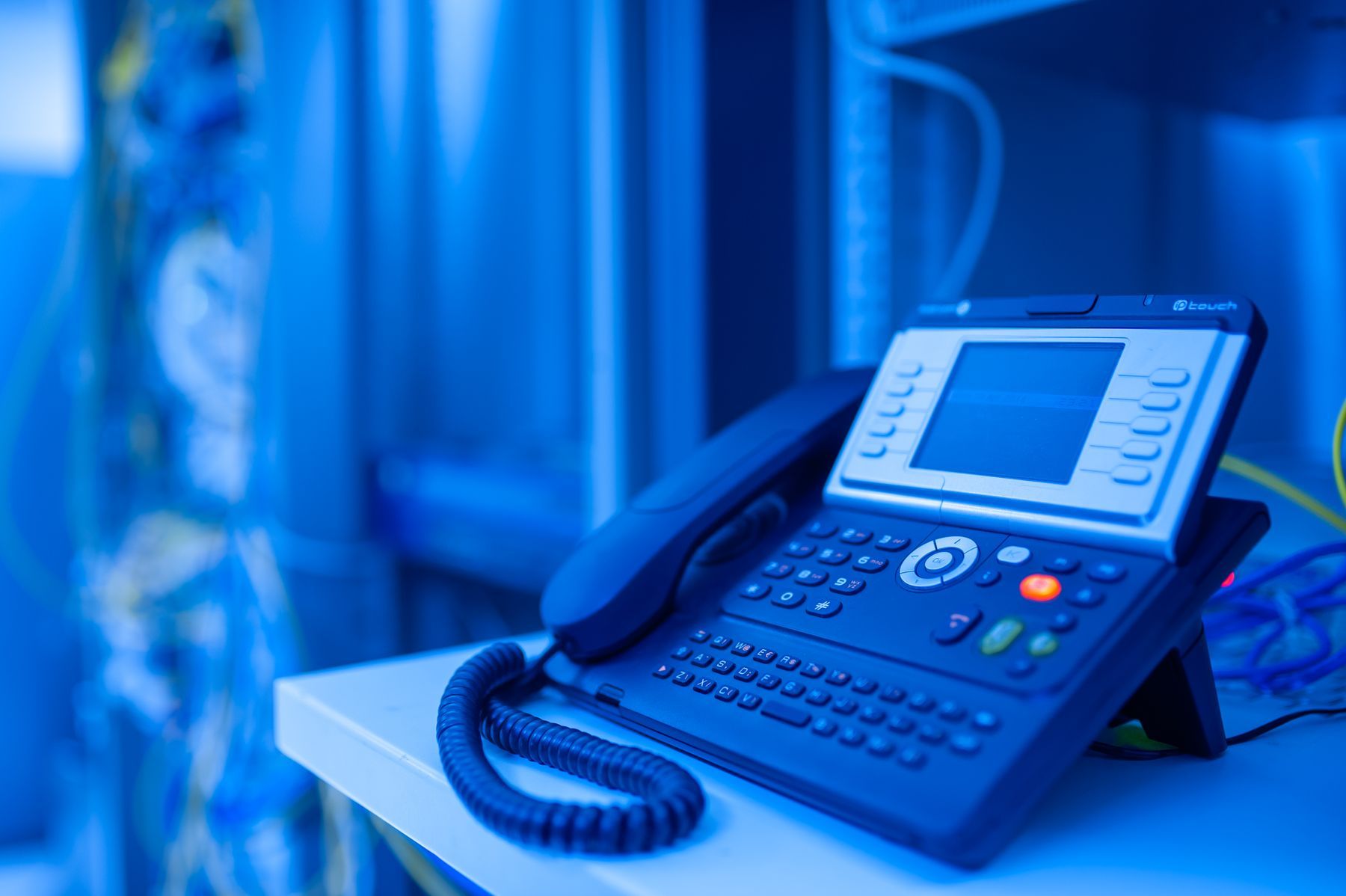
- Yealink
We are not tied to any brand. If your drawings call for something else, we install to the specification.
What we install and who it is for#
Business phone systems today are mostly IP phones on your local network, connected to a hosted voice platform in the cloud or to an on-premise IP PBX, with the cabling, switching and power underneath designed so that voice quality does not depend on luck. Telelink Business Services has been in business since 1983, through the move from key systems and digital PBXs to hosted VoIP and SIP, and the phone system is still one of the systems we design, install and support.
This page is for owners, office managers and IT directors replacing an aging system, GCs who need a phone scope covered on a tenant improvement, and multi-site businesses and agencies that want one system across locations. Telelink Business Services is a licensed C-7 Low Voltage Systems Contractor, CSLB License #472017. On a construction project the work is usually bid under Division 27 32 00.
Hosted VoIP or on-premise PBX: how we help you decide#
A hosted VoIP system puts the call control in a provider’s data center. Your phones register to the platform over the internet, the provider handles the trunks, the voicemail, the auto attendant and the software updates, and you pay per user per month. There is little equipment on site beyond the phones and the network. Adding a location or a remote worker is a configuration change.
An on-premise PBX puts the call control in your telecom room. You own the server or appliance, you connect SIP trunks or carrier circuits to it, and your staff or a service contract maintains it. It suits organizations that need call control to keep working when the internet does not, that have compliance reasons to keep call handling on site, or that already own a current-generation PBX.
We install and support both. The questions we ask are practical: how many locations, how many users, how reliable is the internet connection at each site, does the building have a requirement for phones that work through a network outage, what is the analog device count (fax machines, elevator phones, gate phones, modems), and what does the current monthly carrier bill look like. The answers usually point to one architecture, and we lay out both with costs so the decision is yours.
| Consideration | Hosted VoIP | On-premise IP PBX |
|---|---|---|
| Equipment on site | Phones, switches, router | Phones, switches, PBX server or appliance |
| Cost model | Per user per month | Capital purchase plus maintenance |
| Internet outage | Phones down unless failover is configured | Internal calls continue; trunks may fail over |
| Adding a site | Configuration | Hardware or licensing at the new site |
| Updates | Provider | Your staff or a service agreement |
Migrating off legacy key systems and POTS lines#
A large share of our phone work is migration. A twenty-year-old key system or digital PBX still makes calls, but parts are scarce, the manufacturer support is gone, and the copper lines feeding it are getting expensive.
Copper is going away on the carrier side. Federal rules no longer require the large incumbents to maintain legacy copper services on the old terms, and carriers are now retiring copper plant and raising prices on the plain old telephone service (POTS) lines that remain. That does not mean your lines will be shut off on a date; it means each line is a rising monthly cost and an eventual forced move, planned on your schedule.
A migration has a fixed sequence on our jobs.
- Inventory: every extension, every line, every analog device, every number, every auto attendant and call flow, and every wall jack, documented before anything changes.
- Network readiness: the LAN, the switches, the PoE and the internet connection are assessed and corrected first, because a hosted system is only as good as the network under it.
- Number porting: the port of your existing numbers to the new carrier or platform is scheduled for a day and a time that suits the business, with the old system left live until the port completes.
- Analog devices: fax lines, elevator and gate phones, and the line side of alarm panel communicators are handled one by one, with an analog terminal adapter, a cellular or IP replacement, or a retained POTS line where the device or the code requires it. Alarm panel changes are coordinated with the owner’s licensed alarm company.
- Cutover and training: phones are staged and configured before cutover day, and staff are trained on the new handsets and the voicemail before the old system is turned off.
A line serving an elevator phone or another code-required device stays in service until its replacement is tested and accepted in writing.
SIP trunks, carrier handoff and call routing#
SIP trunking replaces the PRI or the bundle of analog lines that connected your old PBX to the phone network. The trunk is delivered over an internet connection or a dedicated circuit, and the number of simultaneous calls is a contract term rather than a physical line count. For an on-premise PBX we configure the trunk registration, the codec, the failover routes and the dial plan. For a hosted system the trunks are the provider’s responsibility, and we configure the routing on the platform.
Call routing is where the system earns its keep for the business. We build the auto attendant menus, ring groups, hunt groups, time-of-day schedules, holiday schedules, voicemail to email and call queues from the inventory we took during planning, and we test every path before cutover. Multi-site organizations get a single dial plan across locations so that extension dialing works between offices. We install and configure the system with the carrier or hosted platform you select, and the service agreement stays directly between you and that provider.
E911 compliance: Kari’s Law and RAY BAUM’s Act#
Two federal requirements apply to multi-line telephone systems, and any new system we install is configured to meet them.
Kari’s Law applies to multi-line telephone systems manufactured, imported, sold, leased or installed after February 16, 2020. The system must allow a user to dial 911 directly, without a prefix such as 9 for an outside line, and it must send a notification to a central location at the facility, such as a front desk or security office, when a 911 call is placed.
RAY BAUM’s Act, through the FCC’s rules, requires that 911 calls from multi-line telephone systems carry a dispatchable location: the street address plus the information a responder needs to find the caller, such as the floor, suite or room number. The FCC’s compliance dates were January 6, 2021 for fixed devices such as desk phones, and January 6, 2022 for non-fixed devices such as softphones and remote handsets.
In practice, that means we build a location record for every phone, we map phones to floors and rooms on the platform, we set up the on-site notification to the right people, and we test 911 with the public safety answering point using the test procedure the platform and the PSAP require. When a phone moves, the location record moves with it.
The network underneath: QoS, PoE and cabling#
Voice quality on an IP phone system is a network problem. We treat the LAN as part of the phone system.
Quality of service. Voice traffic is tagged and prioritized on the switches so that a large file transfer or a video stream does not step on a call. We put phones on a dedicated voice VLAN, set the switch ports for it, and prioritize the voice traffic at the firewall or router toward the internet as well. On a hosted system, the internet connection needs enough upstream bandwidth for the peak call count, and we size it.
Power over Ethernet. IP phones are powered from the switch port. Most desk phones run on 802.3af, and larger color-screen and video phones need 802.3at. We count the phones per switch, add the access points and cameras on the same switch, and confirm the PoE budget before the phones ship. Power for the switches on dedicated circuits, and a UPS sized to keep the phones up through a short outage, are coordinated with the electrician and shown on our submittal.
Cabling. Plan on a certified Cat6 or Cat6A drop to the IDF for each phone. Old Cat5e or Cat3 cabling that was fine for a digital phone may not carry a Gigabit phone with a PC daisy-chained behind it, so we test the existing cabling and tell you which drops need replacing. New cabling is installed and certified under our structured cabling and network cabling installation services, and the switches and racks are built under network room buildout.
Yealink phones, conference rooms and deployment#
We install and configure Yealink IP desk phones, cordless DECT handsets and conference phones, used with the hosted VoIP platform you choose or with an on-premise IP PBX. Yealink phones are provisioned from the platform, so a phone is configured by its MAC address before it is unboxed, and a replacement phone takes on the extension when it is plugged in.
For conference rooms we install Yealink conference phones and coordinate with our audio visual scope where the room also has a display and a video conferencing system. For lobbies, warehouses and common areas we install wall phones and paging integration where the platform supports it. Every phone is labeled with its extension and its location record, and the closeout package includes the extension list, the call flow diagrams, the network configuration, the E911 location table and the administrator credentials, turned over to you.
Multi-site rollouts are staged so that each location is cut over on its own day with a technician on site. On a tenant improvement, the phone scope is sequenced with the cabling and the room buildout, the way the network and room work was sequenced on the State Controller’s Office floor in Sacramento. Our service and maintenance work covers moves, adds and changes to the system after turnover, including phones for new hires, call flow changes and location record updates.
Next step#
Send us your current extension count, your locations and a copy of your carrier bill through request a bid, and we will return a hosted and an on-premise option with the network work, the phones and the migration steps priced separately. Tenant improvement GCs who need a phone scope covered can find our process on the for general contractors page.
FAQ
Questions about business phone systems
Should we choose a hosted VoIP system or an on-premise PBX?
Hosted VoIP suits most offices and multi-site organizations: no server on site, per-user pricing, and remote workers added by configuration. An on-premise IP PBX suits organizations that need call control to survive an internet outage or must keep call handling on site. We price both from your extension count and carrier bill so the decision is yours.
Link to this answerAre our POTS lines going to be shut off?
Not on a fixed date, but carriers are retiring copper and raising prices on the lines that remain, and federal rules no longer require the large incumbents to maintain legacy copper services on the old terms. We recommend planning the migration on your schedule rather than waiting for a rate increase or a retirement notice to force it.
Link to this answerCan we keep our phone numbers when we move to a new system?
Yes. Your numbers are ported to the new carrier or hosted platform on a scheduled date, and the old system stays live until the port completes. We inventory every number, including fax and direct lines, before the port is requested so nothing is left behind.
Link to this answerWhat do Kari's Law and RAY BAUM's Act require of our phone system?
Kari's Law requires that a multi-line phone system allow direct 911 dialing with no prefix and send a notification to a central location on site when 911 is dialed. RAY BAUM's Act requires that the 911 call carry a dispatchable location such as the address plus the floor or suite. We configure both and test with the public safety answering point using the procedure the platform and the PSAP require.
Link to this answerDo you install Yealink phones?
Yes. We install and configure Yealink desk phones, cordless DECT handsets and conference phones, provisioned from the hosted platform or the on-premise PBX by MAC address so a replacement phone takes on its extension when it is plugged in. Provisioning templates and the extension list are turned over at closeout so your own staff can swap a handset.
Link to this answerWill our existing cabling work for IP phones?
Sometimes. Cat5e that tests clean will carry a Gigabit phone with a PC behind it. Cat3 and damaged or unlabeled runs will not. We certify the existing drops before cutover and tell you which ones need replacing, then install and certify the new ones under our cabling scope.
Link to this answerQuestion not answered here? Ask a person who does this work.
Call (916) 340-7503Email usOr send drawings to bidReviews
What clients have said
Excerpts from reviews clients left on Google over roughly the last ten years. Most of them describe phone, cabling, camera and service work rather than large construction projects, which is a fair picture of who was writing reviews at the time.
These guys handled my phone and phone system move along with wire our new office from top to bottom. When all others failed, such as AT&T, Telelink was there to pick up the pieces. Most important out of all the great things I could say, they took all my calls and emails, no matter what time of day or night, even on the weekend and holidays. They know what they are doing and get it done right the first time.
U.S. Certified SignersOffice move: phone system relocation and a full office cabling installationAfter switching telephone and internet from ATT to Comcast, I needed to have some phone and data lines moved. I called Telelink and immediately received a professional response. An appointment was efficiently scheduled to coordinate with Comcast. The technicians were friendly, capable, and extremely helpful in working through some glitches. After the service, I received an invoice which was honest and very reasonable.
Glick OfficeMoves and changes on phone and data lines, coordinated with the carrierRecently I needed an invoice for a telephone installation put in 3 years ago. Telelink responded and I got the invoice within a day... there has been no problem with the telephone system at all in the last 3 years. Sometimes when things run so smoothly, you do not notice it.
Chris YRecords request three years after a phone system installation
Reviews are reproduced as written, trimmed only where an excerpt is marked with an ellipsis. Have we worked for you? Tell us how it went.
Planning a business phone systems project? Let’s talk.
Send over a drawing set or just describe what you need. We will tell you what we can take on, what to plan for, and how soon we can be there.