Market
Low Voltage Contractor for K-12 Schools and Higher Education
For school district and community college facilities and IT directors, university capital projects and IT staff, and the general contractors and construction managers running bond programs. You get campus backbone, classroom and lab cabling, wireless, paging, cameras and access control installed inside the academic calendar, under DSA inspection where it applies, by a crew that meets the district's fingerprinting or supervision requirement before it arrives.
No obligation, and we will say so if the work is outside our license.
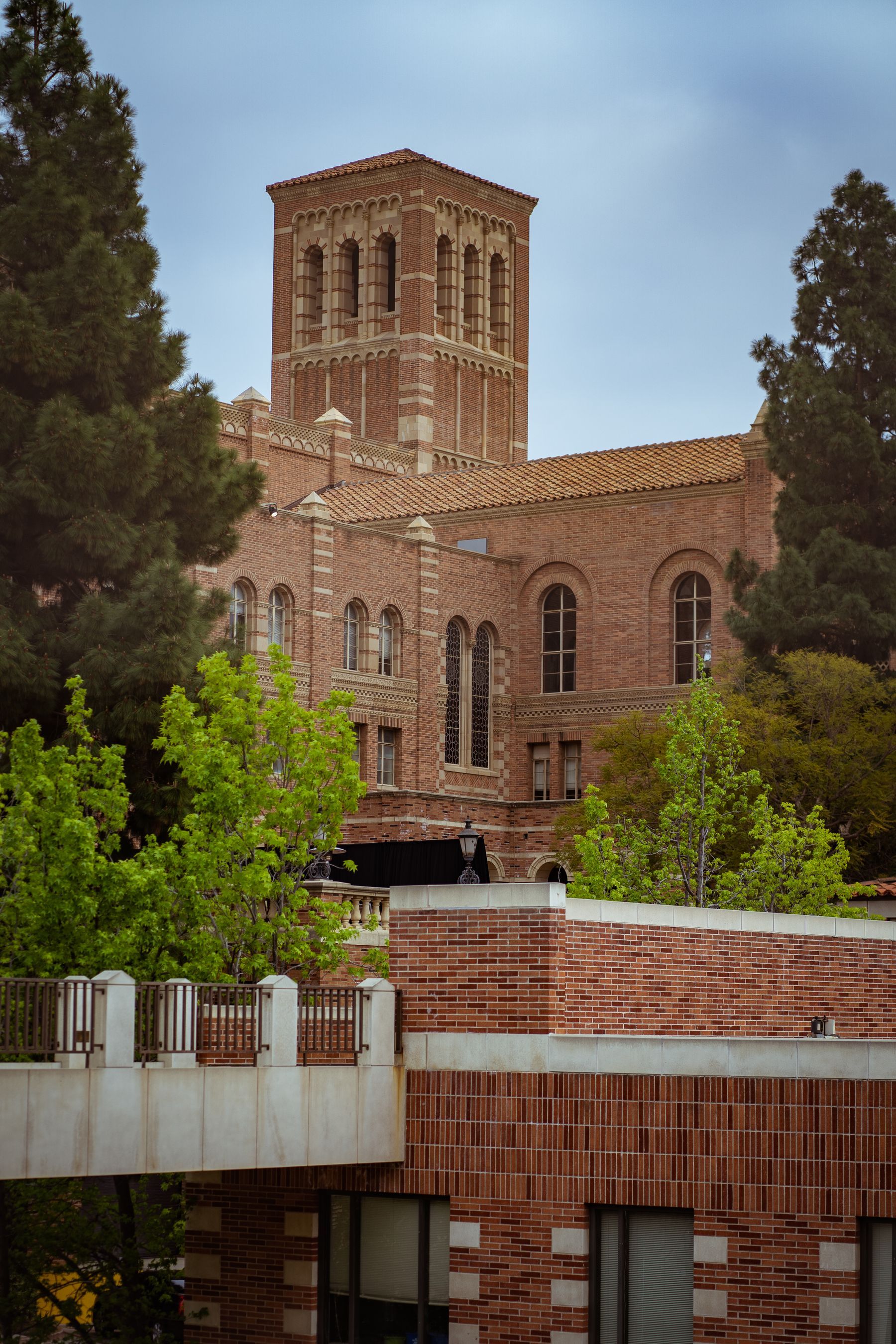
- School district facilities and IT directors
- Community college district facilities and IT
- University capital projects and campus IT
- GCs and construction managers on bond programs
- Campus fiber backbone
- Classroom and lab cabling
- High-density Wi-Fi
- Paging, bell and intercom
- Cameras and access control
- Classroom and lecture hall AV
- DSA review and project inspection on K-12 and community college work
- Education Code fingerprinting rules for contractors near pupils
- ANSI/TIA-4966 educational facilities standard
- Prevailing wage and DIR registration on bond-funded work
- NDAA Section 889 where federal funds apply
- Summer-window and in-session scheduling
| Typical scope | Backbone, drops, Wi-Fi, paging, cameras, access |
|---|---|
| Standards | ANSI/TIA-4966, TIA-568, TIA-606, TIA-758 |
| Scheduling | Summer windows, breaks, after-hours in session |
| Pupil safety | Fingerprinting or barrier and supervision plan |
| Project | Touro University, Vallejo |
| License | CSLB #472017, C-7 Low Voltage Systems |
Campus scope: multiple buildings, one backbone, a fixed calendar#
A school or college is not one building. It is a dozen buildings of different ages tied together by underground conduit and run on a calendar with hard stops. Students are on site most of the year, and the Education Code sets rules for contractor employees who work near them. Each of those facts changes a low voltage installation.
| Campus condition | What it changes in the scope |
|---|---|
| Buildings spread across a site | A fiber backbone in outside plant pathways and a campus MDF feeding building IDFs, not one telecommunications room |
| A calendar with hard stops | Loud, dusty and disruptive work is confined to the summer window, which is shared with district summer programs, deep cleaning and other trades, so the usable days are fewer than the calendar shows |
| Students on site | Fingerprinting through the Department of Justice, or a barrier and supervision plan, for every technician on site |
| DSA jurisdiction on K-12 and community college work | Drawings approved by the Division of the State Architect, and a project inspector checking the work against them |
Telelink Business Services is a licensed C-7 Low Voltage Systems Contractor, CSLB License #472017. We performed the low voltage scope of a campus building renovation for a university in Vallejo, including the fiber backbone, network cabling, IT room and wireless. The sequence below is the one used on that project.
Who buys low voltage in K-12 and higher education#
School districts buy through facilities and IT departments, usually on a voter-approved bond program managed by a construction manager or program manager. The work is public works: prevailing wage, DIR registration, certified payroll and apprenticeship apply, and some delivery methods add skilled and trained workforce requirements. Federal E-rate funds for internal connections bring their own competitive bidding and documentation rules, run by the district’s E-rate consultant.
Community college districts buy the same way, with DSA review on construction and larger telecommunications rooms and backbone counts than a K-12 site.
Universities vary. The state university systems act as their own building officials; private universities go through the local building department. Either way the buyer is campus IT and a capital projects office with its own cabling standard, labeling scheme and approved product list that our submittals have to match.
General contractors and construction managers on any of the above carry Division 27 and 28 and need a subcontractor who can produce the DSA, labor compliance and pupil safety paperwork without being chased for it.
Systems on a typical campus scope, from backbone to bell#
Campus fiber backbone. Single-mode fiber between buildings in underground conduit, installed to TIA-758 for customer-owned outside plant and TIA-568.3-D for the optical fiber, with multimode or single-mode risers inside each building. We install, splice, terminate and OTDR-test the fiber backbone and deliver the traces with the closeout package. Copper is never run between buildings when fiber can do the job, because copper between buildings needs primary protection at both ends and fiber does not.
Classroom and lab drops. Data outlets at the teaching wall, the teacher station, the projector or display, the printer and the phone, plus lab benches at the density the program calls for. Network cabling is Cat6 or Cat6A depending on the district standard; our Cat6 vs Cat6A guide explains the tradeoff, and on new campus work Cat6A to the access points is the usual choice.
High-density Wi-Fi. One-to-one device programs and online testing put a client on the network for every student in the room, all at once. The common design is one access point per classroom with additional coverage in gyms, libraries, quads and lecture halls, designed from a predictive survey and validated with a walk test. We install and configure managed wireless on Cisco Meraki or the district’s specified platform.
Telecommunications rooms. One or more rooms per building, built to TIA-569 with racks, cable management, patch panels and the seismic anchorage the drawings call for. Power and bonding to building ground come from the electrician, and the submittal shows the handoff.
Paging, bell and intercom. Classroom speakers, call switches to the office, bell schedules and all-call paging, cabled and installed on the specified platform and integrated with the phone system where the design requires it. Fire alarm notification appliances are the district’s fire alarm contractor’s devices on a separate permit, and we coordinate the interface and the shared pathway with them.
Cameras and access control. Exterior cameras at entries, parking and fields, corridor cameras where district policy allows, and a single controlled point of entry through the front office with readers on perimeter doors. Electrified door hardware is coordinated with the GC’s Division 08 scope or a licensed C-28 contractor.
DSA, fingerprinting and the rules that only apply near students#
Division of the State Architect. DSA reviews and approves the drawings for K-12 and community college construction in California for structural safety under the Field Act, fire and life safety, and accessibility. The district hires a DSA-certified project inspector who checks the work against the approved set. For low voltage, that means rack anchorage, exterior camera and antenna mounts, and penetrations through rated assemblies must match the approved drawings, and changes go through the architect and DSA rather than a field decision. On a project without a DSA submittal, such as cabling in existing pathways done as maintenance, the district’s architect tells us what applies.
Fingerprinting and background checks. The Education Code requires school districts to protect pupils from contractor employees who may have more than limited contact with them. For construction and repair work, the district can require Department of Justice fingerprinting of every worker, or accept a physical barrier between the work and the students, continual supervision by a cleared contractor employee, or supervision by school personnel. The district decides which. We ask before mobilization, provide the roster and the certification the district requires, and build the fingerprinting lead time into the schedule. Universities set their own vendor screening rules and we follow them.
Asbestos and lead. Asbestos and lead are a live question on an older campus. The district’s asbestos management plan identifies what is in the ceilings and walls, and ceilings on an older campus stay closed until that plan has been checked and any abatement is complete.
Labor compliance. Bond-funded school work is public works. Prevailing wage, DIR registration, certified payroll and apprenticeship apply as they do on any public project, and our government and public works page explains how we handle each.
Scheduling around the academic calendar#
The academic calendar sets the phasing, and phasing drives the labor cost. Campus work is planned in three layers.
- Any time of year: underground conduit and backbone work between buildings, telecommunications room buildouts behind closed doors, headend and network configuration, and after-hours splicing, all inside the fingerprinting or supervision plan.
- Breaks and after hours: work in corridors, offices and common areas during winter and spring breaks, evenings and weekends, with the campus police or custodial staff aware of where the crew is.
- Summer window: classroom drops, ceiling work, camera and speaker installation in occupied teaching spaces, and the cutovers that would otherwise take a room out of service. We staff summer work to finish before the return date with time held back for punch and testing.
On a campus in session, the crew checks in at the office every day, wears the district-issued identification, keeps tools and ladders out of student paths, and stops work in any area where students arrive unexpectedly.
Campus cabling checklist: what the specification should say#
ANSI/TIA-4966 is the telecommunications infrastructure standard for educational facilities. It builds on the TIA-568 series and sets expectations for outlet density, telecommunications rooms, backbone and wireless that are specific to classrooms and campuses. The items below are the ones we check in every education specification before pricing.
| Item | What to confirm | Why it matters |
|---|---|---|
| Backbone media and topology | Single-mode between buildings, strand count, hierarchical star from the campus MDF | Decides conduit fill and future capacity |
| Outside plant pathway | Conduit routes, handholes, existing fill, locating | Underground is the long-lead item |
| Outlet density per room type | Classroom, lab, office, library, gym | Sets the drop count and the price |
| Horizontal media | Cat6 or Cat6A, plenum or riser rating | Cat6A for access points on new work |
| Wireless design basis | AP per classroom or survey-based, PoE budget | Drives cabling and switch power |
| Telecommunications rooms | Location, size, racks, seismic anchorage, cooling | Anchorage is on the DSA-approved set |
| Labeling scheme | Campus, building, room, outlet, per TIA-606 | District IT uses it to trace every drop |
| Testing and closeout | Permanent link certification, OTDR traces, as-builts | What the inspector and IT sign off on |
Proof: Touro University, Vallejo#
At Touro University in Vallejo, Telelink performed the low voltage scope of a campus building renovation: network cabling, an IT room buildout, wireless and a fiber backbone, coordinated with the campus so that building operations continued around the work. The case study describes the scope as performed and the documentation the university received at closeout.
Next step#
Send the drawings, the district or campus cabling standard and the calendar constraints to request a bid, and we will return a bid phased to the academic year with the DSA, labor compliance and pupil safety items called out. Construction managers and general contractors on bond programs can see how we support your bid and submittal process on the general contractor page.
FAQ
Questions about education: k-12 & higher ed projects
Do your technicians need to be fingerprinted to work at a K-12 school?
It depends on how the district applies the Education Code. Contractor employees who will have more than limited contact with pupils are fingerprinted through the Department of Justice, or the district accepts a physical barrier, continual supervision by a cleared contractor employee, or supervision by school personnel instead. We ask the district which approach it wants before mobilization and provide the certification it requires.
Link to this answerDoes low voltage cabling need DSA approval?
On a K-12 or community college project that is under DSA review, our work is inspected by the district's DSA project inspector against the approved drawings, and anything attached to structure, such as rack anchorage and exterior camera mounts, has to match what was approved. Small cabling projects done as maintenance in existing pathways may not need a DSA submittal. The district's architect and inspector make that call and we follow their direction.
Link to this answerCan a campus fiber backbone be installed while school is in session?
Yes, with limits. Underground work between buildings, telecommunications room work and after-hours splicing can run during the school year. Work in occupied classrooms and corridors is scheduled for breaks, after hours or the summer window, and the fingerprinting or supervision plan has to be in place before anyone works near students.
Link to this answerHow many wireless access points does a classroom need?
On a one-to-one device campus the common design is one access point per classroom, cabled with Cat6A so the AP can run at multi-gigabit speed and full PoE. Larger spaces such as libraries, gyms and lecture halls are designed from a predictive survey and validated with a walk test after installation.
Link to this answerDo you install classroom paging and intercom systems?
Yes. We install and cable classroom speakers, call switches, bell schedules and all-call paging on the platform the district specifies, and integrate with the phone system where the design calls for it. Bell schedules and paging zones are programmed to the district's calendar and demonstrated before turnover.
Link to this answerQuestion not answered here? Ask a person who does this work.
Call (916) 340-7503Email usOr send drawings to bidPlanning a education: k-12 & higher ed project? Let’s talk.
Send over a drawing set or just describe what you need. We will tell you what we can take on, what to plan for, and how soon we can be there.