Service
Abandoned Cable Removal and Low Voltage Decommissioning
For general contractors and building owners on tenant improvements and renovations who need abandoned communications cable out of the ceiling: a survey and tagging pass first, live circuits identified before anything is cut, removal sequenced around occupied space, and a documented log of what came out.
No obligation, and we will say so if the work is outside our license.
Why abandoned cable comes out and what counts as abandoned#
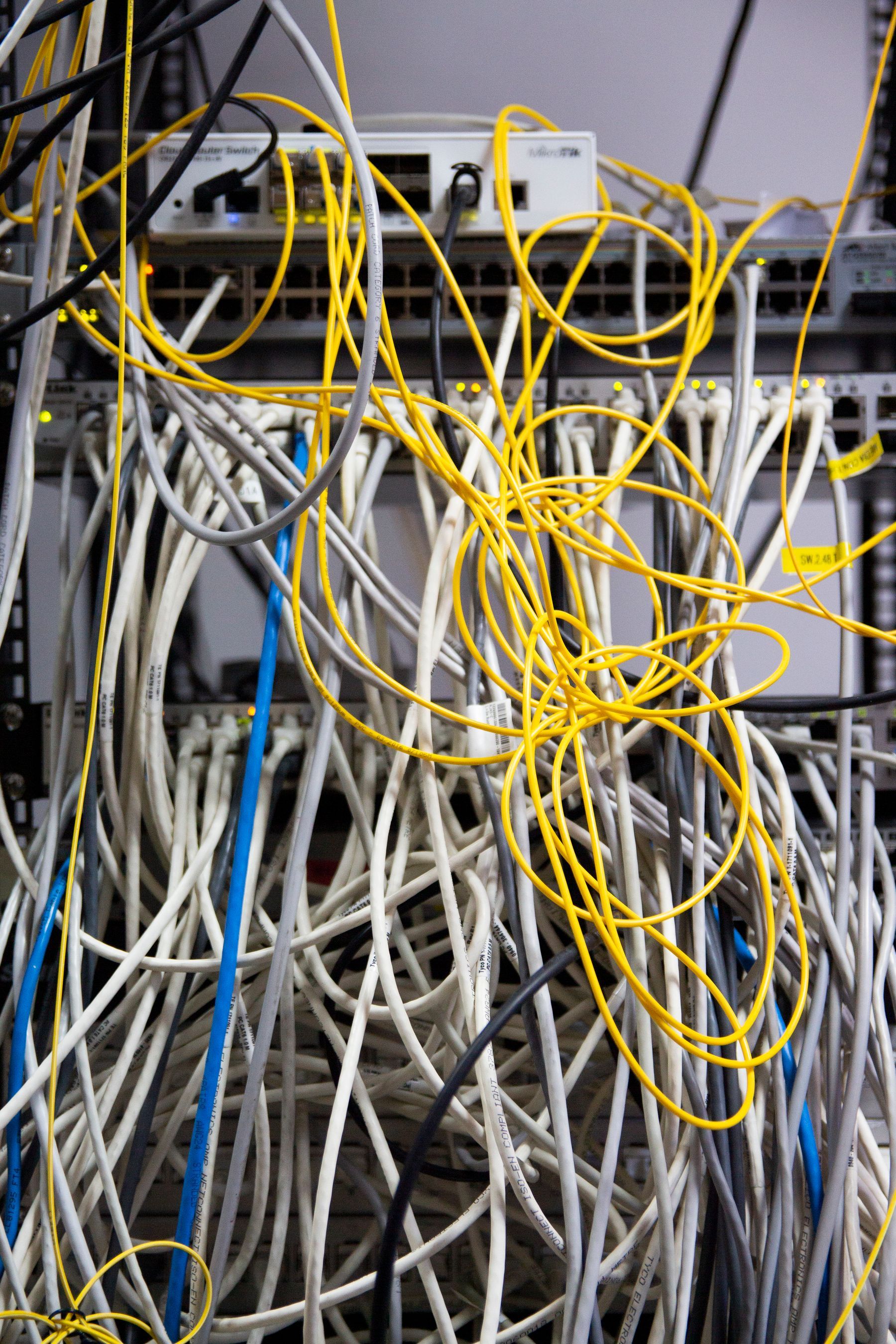
Every tenant improvement in an older building starts with the same discovery. The ceiling is full of cable nobody can account for. Some fed a phone system replaced twice over. Some fed analog cameras. Some was pulled for a tenant who left fifteen years ago. It is all still up there, and it is a problem before the new work starts.
The California Electrical Code, Title 24 Part 3, requires in Section 800.25 that the accessible portion of abandoned communications cable be removed. Abandoned cable is defined by what it is not: cable that is not terminated at equipment and is not identified for future use with a durable tag. The optical fiber and community antenna television articles carry parallel requirements, so fiber and coax get the same treatment. Cable genuinely out of reach, concealed in a slab or a sealed raceway, is not what the section is aimed at.
Two practical reasons sit behind the rule. Cable jacket is fuel. A ceiling packed with three generations of jacketed cable adds a combustible load to a return air plenum the building was never designed around, which is why the code cares about plenum rating in the first place. And cable takes up room. Tray, sleeves and conduit have fill limits, and when the existing bundle is at capacity there is nowhere to land the new structured cabling. Pulling dead cable out is frequently cheaper than adding pathway, and it is faster.
Telelink Business Services is a licensed C-7 Low Voltage Systems Contractor, CSLB License #472017. We bid removal as its own scope on tenant improvements, floor renovations and system replacements.
The survey and tagging pass that comes first#
Nothing gets cut on the first visit. The survey pass produces the document everything else runs from.
We walk the ceiling zone by zone against the reflected ceiling plan, open tiles on a grid, and record what is in each pathway: cable type, approximate count, direction of travel, and where the bundle lands. We open every telecom room and closet and inventory what is live on each panel and block. We photograph the congested areas before anything moves, because those photographs settle arguments later.
Out of that comes a removal schedule: zones, quantities, access requirements, and a separate list of everything the owner wants kept. Cable identified for future use has to carry a durable tag, and the tag is a commitment rather than a convenience. Tagging is cheaper than removal on the day, so the temptation is to tag everything. A tag that says a cable is reserved should correspond to a phase somebody can name.
The GC signs the removal schedule before we start. That is the step that turns an argument about scope into a line item.
Identifying live circuits before anything is cut#
A cable is live until it has been proved dead. That is not caution. It is the only defensible position when the cable in your hand might be an elevator phone line.
The order is trace, confirm, label, then cut. Tone and trace each bundle from the termination back into the field with a tone generator and an inductive amplifier. Confirm what the far end serves against the owner’s IT staff, port by port, on their own patch schedule. Check for voltage and PoE before cutting anything landing on a panel we did not inventory. Label both ends of everything that is staying. Then cut, and only in the zones on the signed schedule.
Low voltage pathway carries systems that never appear on an IT department’s list. Elevator phones. Gate and door intercoms. Nurse call. HVAC controls. Card reader home runs. CATV riser. Duress stations. Fire alarm circuits. In an occupied building each of those has a user who notices within minutes and a system that may not be documented anywhere.
Where a cable cannot be traced with confidence it stays, and it is flagged in the report rather than cut on a guess. Proving out and documenting what remains is covered on our cabling testing and audits page.
What gets removed and what gets tagged and left#
The split is rarely about the cable itself. It turns on whether the cable is terminated at equipment, whether it is reachable, and whether anyone will put a name to a future use.
| Typically removed | Typically tagged and left |
|---|---|
| Cable cut back to a panel or block with no equipment on it | Cable serving a device or a system still in use |
| Coax from a replaced CATV headend or an analog camera system | Spare capacity assigned to a named future phase, durably tagged |
| Analog phone home runs after a voice over IP cutover | Cable concealed in a slab, a sealed raceway or an unreachable chase |
| Dead patch panels, blocks, racks, headends and orphaned devices | Tray, J-hooks, sleeves and conduit the new system will reuse |
| Cable above a space being demolished in the tenant improvement | Fire alarm circuit conductors |
Hardware comes out the same way. Dead racks are unbolted rather than cut free, blocks and panels come off with their backboard hardware, and headend equipment is disconnected by the electrician where line voltage is involved. Where the room is being rebuilt rather than emptied, that work is on our network room buildout page.
Sequencing a removal in an occupied building#
Removal in an occupied building is a schedule problem more than a technical one. The cable does not care what time it is. The tenants do.
We work zone by zone and each zone closes before the next one opens. Ceiling tiles come out onto drop cloths and go back the same shift. Corridors and egress paths stay clear, which means the bundle is cut into manageable lengths at the access point and bagged rather than dragged the length of a floor. Dust control matters in a ceiling that has not been opened in twenty years, and any work that could set off a smoke detector is coordinated in advance with the building’s fire alarm contractor, with detectors restored the same day.
The bottleneck is almost never the ceiling. In a mid-rise it is the freight elevator and the loading dock window. Removed cable is heavy and bulky, and the rate at which it leaves the building governs the rate at which it comes out of the ceiling. Bins, dock and elevator get scheduled before crews do.
Occupied work is most of what we do. The Little Tokyo Towers renovation in Los Angeles was carried out with the building occupied throughout, and our guide to low voltage work in occupied buildings sets out the notification and access practices behind that.
Fire alarm circuits, hazardous materials and the other trades#
Three pieces of a strip-out belong to other trades, and settling them before pricing keeps all three out of the change order log.
Fire alarm. Removal of fire alarm circuit conductors is performed by the project’s licensed C-10 fire alarm contractor. We identify those circuits during the survey, tag them, leave them in place, and hand the list over so both removals run in the same window rather than opening the ceiling twice.
Hazardous materials. Abatement is carried by a licensed abatement contractor. Asbestos related work involving 100 square feet or more of asbestos containing material requires a C-22 classification or CSLB asbestos certification under Business and Professions Code section 7058.5. Building owners are responsible for providing hazardous materials surveys for pre-1990 structures before removal begins. That is not a formality on a building from the 1970s: fireproofing overspray on the deck, mastic around old cable supports and ceiling texture are all places where suspect material meets cable removal work. Where we encounter material we did not expect, work stops in that zone and the owner is notified in writing.
Electrical. Line voltage conductors, raceway demolition and grounding are electrical, C-10 scope. Where a rack or headend being removed has line voltage feeding it, the electrician disconnects and makes it safe before the equipment comes out.
None of this slows down a job that planned for it. All of it slows down a job that discovers it on the morning the crew arrives.
Pricing the work, recycling weight and closeout records#
Abandoned cable removal is a line item. It is not something a cabling contractor absorbs because the crew is already in the ceiling, and a bid that hides it will produce a change order. Priced by the linear foot of cable removed or by the zone, the drivers are these.
- Ceiling type. Accessible lay-in tile is one number. Hard lid, drywall soffits and open structure at height are another.
- Access. Ladder work against lift work, and whether a lift can reach where the cable is.
- Congestion. A loose bundle on J-hooks pulls out. A bundle banded into a full tray every twelve inches comes out by hand, foot by foot.
- Occupancy and hours. After-hours, weekend and noticed-entry work carry their own rates, and public work carries prevailing wage.
- Disposal logistics. Bins, dock access and the route the material takes out of the building.
As a California commercial planning range as of 2026, removal from an accessible lay-in ceiling in vacant space commonly runs a few tens of cents per linear foot of cable, while hard lid ceilings, lift work, heavily banded tray and after-hours access can push it to several dollars per foot. That is a planning range for budgeting, not a quote.
Copper has scrap value, and removed cable is sorted, weighed and recycled rather than landfilled. Where the volume justifies tracking it, the scrap credit is shown against the removal and the weight tickets go into the closeout.
The owner receives a removal log by zone with quantities, before and after photographs of every ceiling area and telecom room, the tagging schedule listing each cable identified for future use, the recycling weight tickets, and a marked drawing showing what came out and what remains. That last document makes the next renovation cheaper.
Next step#
Send the reflected ceiling plan and the demolition scope through request a bid, and we will price the survey, the tagging pass and the removal as separate lines so the GC can see what drives the number. If the building predates 1990, send the hazardous materials survey with it. General contractors can review how we bid and document this scope on the for general contractors page.
FAQ
Questions about cable removal
Is abandoned cable removal actually required in California?
The California Electrical Code requires the accessible portion of abandoned communications cable to be removed. Cable that is terminated at equipment, or identified for future use with a durable tag, is not abandoned. Cable sealed in a slab or an inaccessible chase is not what the requirement is aimed at.
Link to this answerCan we just tag the old cable and leave it in the ceiling?
Only where the tag is honest. A durable tag identifying cable for future use is what the code allows, but a future use should be a phase somebody can name. Tagging a floor of dead Cat3 to avoid the removal cost puts the same conversation in front of the next contractor and the next inspector.
Link to this answerDo you remove fire alarm cable?
Fire alarm circuit conductors are pulled by the project's licensed C-10 fire alarm contractor. We identify those circuits during the survey, tag them, leave them in place, and hand the list over so both removals can be sequenced on the same floor instead of opening the same ceiling twice.
Link to this answerHow do you know a cable is dead before you cut it?
We trace it. Tone and trace from the termination into the field, confirm the far end against the owner's own patch schedule port by port, and check for voltage and PoE before cutting anything on a panel we did not inventory. Anything that cannot be traced with confidence stays and gets flagged in the report.
Link to this answerWhat about asbestos in an older building?
The building owner provides the hazardous materials survey for a pre-1990 structure before removal begins. Abatement is carried by a licensed abatement contractor, and asbestos related work at or above 100 square feet requires a C-22 classification or CSLB asbestos certification under Business and Professions Code section 7058.5. If we encounter suspect material, work stops in that zone and the owner is notified in writing.
Link to this answerHow is removal priced on a tenant improvement?
As its own line item, by the linear foot of cable removed or by the zone. Ceiling type, access, how tightly the existing bundle is banded into tray, occupancy and after-hours requirements, prevailing wage on public work, and the route the material takes out of the building all move the number.
Link to this answerQuestion not answered here? Ask a person who does this work.
Call (916) 340-7503Email usOr send drawings to bidReviews
What clients have said
Excerpts from reviews clients left on Google over roughly the last ten years. Most of them describe phone, cabling, camera and service work rather than large construction projects, which is a fair picture of who was writing reviews at the time.
These guys handled my phone and phone system move along with wire our new office from top to bottom. When all others failed, such as AT&T, Telelink was there to pick up the pieces. Most important out of all the great things I could say, they took all my calls and emails, no matter what time of day or night, even on the weekend and holidays. They know what they are doing and get it done right the first time.
U.S. Certified SignersOffice move: phone system relocation and a full office cabling installationI had an issue with my cameras and called for help. He was able to get me on the schedule within the week. They came out, diagnosed the problem, and fixed everything within a couple hours. Very professional, affordable, and fast.
Evan KorisService call on an existing camera systemAfter switching telephone and internet from ATT to Comcast, I needed to have some phone and data lines moved. I called Telelink and immediately received a professional response. An appointment was efficiently scheduled to coordinate with Comcast. The technicians were friendly, capable, and extremely helpful in working through some glitches. After the service, I received an invoice which was honest and very reasonable.
Glick OfficeMoves and changes on phone and data lines, coordinated with the carrier
Reviews are reproduced as written, trimmed only where an excerpt is marked with an ellipsis. Have we worked for you? Tell us how it went.
Planning a cable removal project? Let’s talk.
Send over a drawing set or just describe what you need. We will tell you what we can take on, what to plan for, and how soon we can be there.